Driven by environmental concerns, regulatory mandates, and the pressing need to curb greenhouse gas emissions, the global push for sustainable energy has intensified. The European Union and other regions have set ambitious targets to reduce greenhouse gas (GHG) emissions by 2030, extending up to 2050.
Category: Governments
Authentix Collaborates with Industry Partners on Whitepaper Addressing the Carbon Intensity of Sustainable Marine Fuels
|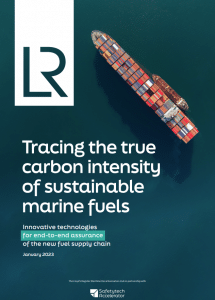 The marine shipping industry is increasing its focus on alternative fuels that can significantly reduce GHG emissions, but lacks the visibility and traceability to determine the carbon intensity and related cost even with today’s sustainable marine fuel sources.
Authentix has collaborated with Safetytech Accelerator and Lloyd’s Register on the development of a whitepaper that illustrates how innovative technologies, including Authentix’s fuel fingerprinting solution, can be used to validate the environmental and commercial impacts from using green fuels in shipping.
Authentix, Inc. and FAS Authentication Ltd. Win Fuel Marking Contract for Securing Transnet Fuel Pipelines
|13 April 2022 – Authentix and FAS Authentication have been awarded a contract to pilot marking and securing fuel being delivered through Transnet Pipelines (TPL), the largest multi-product operator in Southern Africa. The technology will allow TPL to mark and trace petroleum products in their custody and support authorities in taking enforcement action if product is stolen or diverted. The scope of the program includes supplying proprietary covert chemical markers to differentiate fuel streams under TPL’s custody from the intake to delivery point. Transnet will test the performance of the tracing technology during this contract period and decide if further expansion of the program is warranted.
Transnet Pipelines transports approximately 17 billion litres of hydrocarbons and methane-rich gas through a network of over 3,000 km of petroleum and gas pipeline infrastructure. Naturally, challenges exist in protecting the integrity of these fuels during transit. TPL has witnessed an alarming increase in the frequency of product theft. These illegal activities cost the government and major fuel companies millions of Rand – as well as threaten the environment, health, and safety of South Africans.
As part of this pilot contract, the Authentix/FAS consortium will manage all in-country logistics for the program including security, warehousing, personnel, and infrastructure as well as the application of the core technology, enabling hardware, and custom analyzers. The solution will include the Authentix Information System (AXIS®), a cloud-based data information platform, to enable tracking, compliance, and enforcement when illicit or stolen fuel products are found in the supply chain. This fuel integrity system will provide fuel product authentication via inert and environmentally friendly technologies.
Authentix’s fuel integrity programs have helped dozens of national governments and international corporations to recover billions of dollars in lost revenue due to illicit trading and theft.
Meeting The Biofuel Compliance Challenge
|By: Jeff Conroy, Chief Technology Officer, Authentix
 Authentix is pleased to be included in the June/July edition of Tank Storage Magazine, a leading industry publication delivering the latest news and developments to the bulk liquid storage and terminal sector.
In our feature article, Jeff Conroy, PhD, Chief Technology Officer for Authentix, discusses the challenges and possible solutions for the quality assurance and source integrity of renewable biofuels which are increasingly relied upon to meet mandates greenhouse gas (GHG) reductions.
However, the production of biofuels from non-sustainable sources or energy intensive processes can lead to reduced environmental benefits or even an overall increase in emissions, so the pedigree of otherwise chemically identical biofuels becomes very important.
TransAct™ Digital Tax Stamp Solution
|Many communities depend on tax revenues to support critically needed public services. Taxes collected from the production and purchasing of products such as tobacco, alcohol, carbonated beverages, water or fuel is a significant financial contributor to a state or nation. Authentix collaborates with finance ministries, revenue agencies and customs departments worldwide to find products not being taxed and identify the source of the illicit activity. Our consultative approach and over 25 years of authentication and tax recovery experience enables us to understand and address tax collection challenges amid complex supply chains.
To learn more, view our TransAct™ Digital Tax Stamp Solution video below.
Customer Spotlight: Serbia Fuel Integrity Program
|The Case for Implementing National Fuel Integrity Programs
|Reducing Illicit Fuel Fraud and Recovering Revenue for National Governments around the World
By Andrée Bourgeois, Senior Marketing Manager, Authentix

The impact on national governments from adulterated, diluted, and illegally trafficked fuel within a country’s borders results in lost tax revenue, poor quality product, environmental issues, and ultimately reduced community services and benefits for citizens. After 25 years of working with dozens of government ministries and leaders to implement fuel integrity programs across the globe, Authentix has helped many countries expand revenue collections by reducing or eliminating the proliferation of tax avoidance and illegal profiting through illicit fuel sales. Many countries that implement an Authentix fuel integrity program quickly see reductions of this illegal activity by more than 30 percent annually with corresponding increases in taxation revenue.
Our experience and years of data has proven that implementing fuel integrity programs has substantial benefits to many national governments and its citizens alike, providing very high returns on investments made. Many governments have published data showing the positive impact of securing and monitoring their fuel supply including Ghana, Serbia, Zambia, South Africa, and most recently, Kenya published an article further confirming the effectiveness of its fuel integrity program. As stated in the publication businessdailyafrica.com, Kenya’s Energy and Petroleum Regulatory Authority (EPRA), which is mandated under Section 92 of the 2019 Petroleum Act, is charged with monitoring petroleum products offered for sale in the local market and has continued to enhance its fuel integrity program with tremendous outcomes. As a result, Kenya continues to reduce fuel adulteration and is well on the way to achieving near 100 percent reduction of fuel fraud.
READ THE FULL ARTICLE HERE.
To mitigate adulteration challenges, many governments such as Kenya have taken action to implement national fuel integrity programs curbing fuel fraud, recovering missing tax collections, and restoring confidence in the national fuel supply. These programs are continuing to grow in number and scope as technology advancements result in more sophisticated enforcement techniques as well as building a history of data retention, correlation, and actionable insights over time. As programs remain implemented, product and supply chain data are collected over multiple points in the supply chain — providing organizations complete visibility of trends, reconciliation issues, and machine learning capabilities to help prevent, correct, enforce, and ensure ultimate compliance.
Most fuel integrity programs in place today involve chemically marking fuel at refineries and/or terminal distribution points to ensure that all fuel in the downstream supply chain can be authenticated all the way to retail points of sale. The fuel is typically marked by dosing with an inert, organic chemical marker at levels so low (parts per billion), the presence of the marker cannot be detected without proprietary and highly sophisticated devices. As fuel is sampled and tested in supply vehicles, retail stations, and even consumer vehicles, it is possible to determine if the fuel has been diluted with substandard or non-taxed products such as waste oil, off-road tax-free fuel, or via other illicit means. The detection technique enables accurate quantification using portable analyzers in the field or more enhanced, forensically defendable methods in a laboratory.
Authentix is the market leader throughout the world delivering these solutions and has become a trusted and effective partner for national governments to validate fuel quality and supply authenticity, and provide the tools to enforce and prosecute those whom are trafficking illicit fuel products. Authentix continues to build its large library of unique covert markers, resulting in the highest level of authentication security and effectiveness available today. Authentix has spent decades building its suite of custom markers which take many different forms and vary in application and use based upon the country’s unique set of requirements.
The return on investment of successfully deployed fuel integrity programs by Authentix is substantial, helping governments recover millions in lost tax revenue each year, while positively impacting the society through expanded services and infrastructure and resulting in a cleaner environment for all.
Learn more about Authentix National Fuel Integrity Programs.
Andrée Bourgeois is Senior Marketing Manager for Authentix. As the authority in authentication solutions, Authentix thrives in supply chain complexity. We provide advanced authentication solutions for governments, central banks and commercial companies, ensuring local economies grow, banknote security remains intact, and commercial products have robust market opportunities. Our partnership approach and proven sector expertise inspires proactive innovation, helping customers mitigate risks to promote revenue growth and gain competitive advantage.
Fuel Authentication & Traceability through the Supply Chain: Advancing Quality & Sustainability
| The Oil and Gas industry is facing increasing pressure to take urgent actions toward a low-carbon future. Some have responded already by setting bold Net Zero and other ambitious Sustainability targets by 2050. With the current geopolitical landscape, the industry continues to be challenged to innovate in navigating climate and environmental issues driven by constantly changing policy and regulations.
To emphasize the seriousness of the industry’s need to address climate issues, the Energy Institute recently focused on the energy transition as the key theme at IP Week 2020, held in London this February. As a key conference speaker on behalf of Authentix, I had the opportunity to share unique insights on how physical and digital fuel authentication technologies can help reduce emissions, protect the environment, and enable a more sustainable future, while also removing manipulation throughout the supply chain.
Fuel Adulteration’s Impact on the Environment
Fuel adulteration has proven to increase emissions of harmful pollutants from vehicles and worsen urban air pollution that lead to adverse impacts on human health. For example, kerosene, which when illegally added to a nation’s fuel supply, increases levels of carbon monoxide (CO) by as much as 50%. CO is one of the most common adverse by-products caused by adulterants often added to gasoline and diesel supplies to dilute taxable fuels with non-taxed or extremely low-cost materials.
To assess the level of impact of fuel adulteration on emissions, a study was conducted by the Journal of Civil Engineering and Environmental Technology in India, a country where this continues to be a significant and ongoing problem. The study concluded that gasoline adulterated with five percent kerosene was found to have a CO value of 16.4%, while gasoline with a 55% adulteration factor increased the CO value to 51.6%, an alarming increase.
In many countries, fuel adulteration using harmful by-products, waste oils, etc. can make up to 30% of the total volume of gasoline or diesel sold. It’s no secret that petroleum products present a lucrative opportunity for those who wish to deliberately manipulate fuel supplies for illicit monetary gain. Such activity is a huge environmental and financial problem for oil companies and governments alike. In fact, the annual worth of illicit fuel trade is estimated to be $133 billion and growing.
How Fuel Integrity Can be Compromised
Fuel manipulation can occur in multiple ways. If you consider the complex downstream supply chain, there are intentional or accidental vulnerabilities at many points that provide opportunities for fuel adulteration. These include:
- Diversion
- Dilution or substitution
- Theft
- Human error
- Equipment malfunctions
When any of these factors occur, it can result in the wrong product used in the wrong application. Without a traceability solution of some kind, it then becomes difficult to determine where and when the wrong product entered the supply chain.
Finding the Right Solution: Balancing Performance and Cost
To mitigate these challenges, oil companies and government agencies must be able to track and validate the quality and authenticity of their fuel at all points in the supply chain. This requires advanced technologies that can not only authenticate the fuel, but also identify and record meaningful data for product insights to be gained from terminal to retail station.
Marking fuel by inserting an extremely low dose (parts per billion) chemical marker into a petroleum product has become one of the most trusted solutions for enabling the detection of adulterants and to understand where this problem is happening. To provide the highest level of security and effectiveness, Authentix currently provides dozens of governments and branded fuel companies with proprietary and unique covert marker systems that vary in complexity and scope. Detection and measurement can occur in the field, in a laboratory, or both depending on the needs of the organization.
While fuel integrity programs are an effective way to combat adulteration, questions may remain about the quality and legitimacy of the fuel being refined or imported. To address this uncertainty, organizations and governments typically perform fuel quality assurance testing using ASTM standards via third-party laboratories. While ASTM testing is a longstanding and accepted method, it can be very expensive, and results are delayed as organizations struggle to find the balance between performance and cost.
For organizations looking for a more affordable and faster alternative to traditional lab-based ASTM testing, Authentix provides solutions for field use leveraging portable devices using sophisticated chemometric models, which can identify fuel composition and predict the overall quality and chemical properties. Applying this method, field enabled inspectors can simultaneously measure the density and the spectrum of fuel samples modeled to ASTM properties without the expensive and slower lab-based methods. These portable measurement devices can be used for a wide variety of fuels, including gasoline, diesel, jet, and other specialized fuels. In addition, IOT sensors can be installed in downstream locations for monitoring fuel volumes, which aid inspectors to audit consumption, shortages, and assist in demand forecasting.
In many cases, quality, volumetric, and usage data can complement a fuel integrity program with variable-time monitoring and actionable intelligence – enabling testing and visibility at any and all points in the supply chain.
Using Data Intelligence to Bring it Together
The magic bullet is not just the chemical marker itself nor the fuel quality testing method if used independently. But imagine the ability to collect, correlate, and analyse multiple data points from different sources that feed into a single data platform, providing a unique and actionable dashboard view into all elements of the fuel supply chain. As digital transformation continues to permeate the oil and gas industry, Authentix is accelerating its digital technology to provide this platform. The Authentix Information System, or AXIS®, is a cloud-based, integrated set of software applications designed to provide comprehensive and insightful data for our customers to make remediation and enforcement decisions, thereby giving them the ability to rapidly take preventative or corrective action.
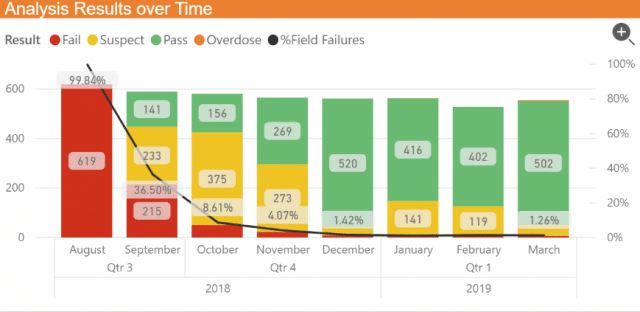
AXIS® report showing month-over-month view of failure results
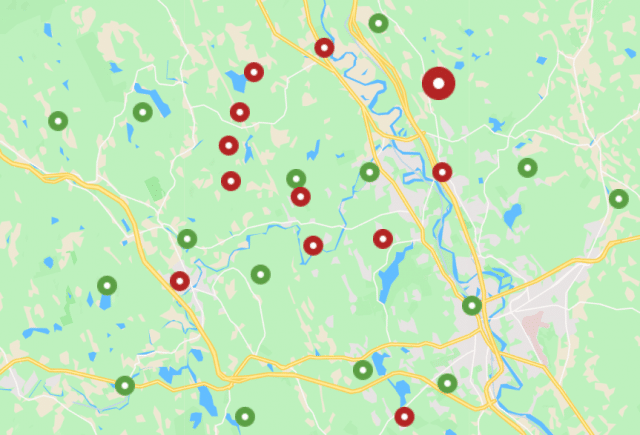
AXIS® report showing geographical view of location of stations tested and pass/fail rates
Looking Ahead
The move to a more sustainable future, decarbonization, and lowering adverse impacts of climate change will no doubt take an incredible allocation of time, technology, and resources. By having full visibility and control over the fuel supply chain, our customers are able to deter illicit activity and reduce unauthorized fuels in the market. Therefore, implementing a fuel integrity program has shown to directly improve emissions, reduce pollutants, and improve overall consumer health and safety. In our view, this becomes an important piece of the solution and should become a key component of any Net Zero or Sustainability Plan going forward.
About Authentix
As the authority in authentication solutions, Authentix thrives in supply chain complexity. We provide advanced authentication solutions for governments, central banks and commercial companies, ensuring local economies grow, banknote security remains intact, and commercial products have robust market opportunities. Our partnership approach and proven sector expertise inspires proactive innovation, helping customers mitigate risks to promote revenue growth and gain competitive advantage.
To learn more, email info@authentix.com.
Customer Spotlight: Fuel Authentication
|Fighting the Illegal Market: An Interview with Tim Driscoll
|By: Mila Milosavljević
The article below is the result of an interview conducted by Mila Milosavljević, a writer for Serbian publication Pečat, of Tim Driscoll, Authentix Senior Vice President and General Manager, Currency and Tax Stamp. This content has been edited and translated to English for use on authentix.com. You can find the original copy on the publication’s website http://www.pecat.co.rs/2019/11/tim-driskol-borba-protiv-ilegalnog-trzista/
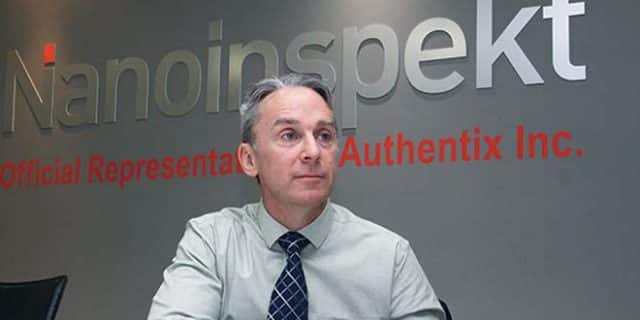
Tim Driscoll is the Senior Vice President and General Manager of Currency and Tax Stamp at Authentix, a US-based company committed to helping government officials and business leaders thrive in supply and distribution chain complexity with innovative authentication solutions. With offices in Europe, the Middle East and Africa in addition to the US, Authentix provides global support to central banks to protect their banknotes, helping tax authorities collect excise taxes and helping governments and national oil companies maintain fuel quality and fight fuel smugglers. Authentix also works with brand owners to protect the health of their customers and protect revenue that they’re losing due to diversion and counterfeiting.
Authentix partners with organizations in several countries to best serve their customers. Authentix’ partner in Serbia is Nanoinspekt, which is Authentix’ official representative and distributor in Serbia and the surrounding countries. As our interlocutor points out, these two companies are intensively working on expanding their business and cooperation in the future.
Can you tell us more about your background?
I have been in the product authentication industry for almost 25 years and have spent the last 14 years at Authentix. I have used my physics background and experience in the industry to serve as a trusted partner to government clients as we help them address their counterfeiting and tax recovery challenges.
How is Authentix is pushing boundaries in this business?
The solutions we apply are very complex and involve a wide variety of innovative technologies. Authentix is developing new security measures to enhance these programs. We are raising these programs to a higher level by implementing new and enhanced software systems to collect and analyze the data gathered from program operations. Part of our mission is to protect the integrity of the global marketplace through innovative authentication solutions. We are constantly improving the way we process operational data that we provide to clients. Those clients who successfully implement the program use data analytics as a basis for prioritizing and adopting appropriate measures to ensure product authenticity in the market.
How was Authentix founded?
The creation of Authentix started with two companies, one based in the US, and the other based in the United Kingdom. The foundation of the US company was based on technologies derived from Los Alamos National Laboratory, which later turned into fuel marking technology. The British company was based on a completely different technology derived from the University of York, which also found application in the fight against smuggling. In 2003, the two companies merged to form Authentix.
What would you define as the greatest achievement of Authentix so far?
In general, the programs we are most proud of are those that pay back taxes evaded by illegal acts to the state and its citizens. Also, one of the programs we are most proud of is the program in Serbia. This program illustrates what a strong partnership looks like when the right technology is implemented, when quality operational data is provided, and when authorities are willing to leverage that data to combat the illegal fuel market.
Tell us more about the programs in the field of excise stamps and protection of banknotes?
As far as the excise stamp program is concerned, we are very proud of the program we have introduced in Ghana. In this program, we have created a technology solution that allows the state to collect the full amount of excise duty on tobacco, alcohol and other beverages including beer, as well as water and sodas.
How have these programs been implemented before Authentix, and how are they done now, using the analogy of how fuel was once marked with solvent (yellow) and now molecular nanomarker?
All of these programs are essentially a game of cat and mouse. When we find a solution to one problem and apply it, those involved in the illegal fuel trade immediately try to circumvent security solutions. To address this problem, Authentix focuses on being flexible. We are flexible in the technology selected, how it’s implemented and how it is supported. The banknote security industry has historically been reduced to a very small number of companies. Authentix, as one of these companies, has created innovative products for central banks that will solve their problems. The current trend of this industry is that central banks are trying to reduce dependency on one company. They are less likely to procure all protection measures from one or a small number of suppliers and want to be free to choose different offers from different suppliers. This is not the easiest way to keep the security level at a high level, but Authentix solutions are tailored to how central banks operate. For example, our features are seamlessly added into the banknotes and our sensors are easily integrated into the existing equipment used by most central banks.
How do you evaluate cooperation with Nanoinspekt, your partner in Serbia?
The collaboration so far has been fantastic. We collaborate with many partners around the world, but one thing that is special about Nanoinspekt is that we do not perceive it as a collaboration, but feel as if we are part of the same company with the same purpose.