By Type: Articles

Authentix® UK Ranks #6 on York’s Top 100 Business List

     |     

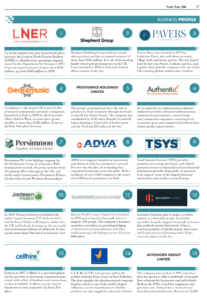
ADDISON, Texas, 8 April 2022 — Authentix, the authority in authentication and information services, has been ranked sixth in York’s Top 100 Businesses in an annual report published by The Press in conjunction with its partners, York St John University and City of York Council.

Moving up in three years from 50th to now 6th in York’s Top 100 Business List, the York-based Authentix team is proud to be a part of this list of significant businesses that have remained committed to investing in the local York economy. According to York St John Business School, a custom algorithm takes into account performance indicators such as turnover, profit, size and growth to determine the businesses that are key contributors to York’s professional landscape.

“We are honored to be a thriving part of the York business community. Being recognized in the York Top 100 Business List is a testament to our continued rapid growth and moreover to the Authentix team and all of our employees worldwide who are focused on our clients and helping to create a world of confident commerce,” said Kent Mansfield, Chief Sales and Marketing Officer. “Being named in the top 10 of these 100 excellent companies for two consecutive years, is an honor and our team is motivated to continue our company’s strategic focus to expand our reach as a global organization while still being grounded to the local communities we serve.”

The top 100 businesses were featured in a special supplement publication that was distributed along with the April 5th issue of The Press. The top businesses who were honored gathered at the university to launch the issue, network, and toast to the diverse range of businesses in York.

About Authentix:

As the authority in authentication solutions, Authentix thrives in supply chain complexity. Authentix provides advanced authentication solutions for governments, central banks, and commercial brand owners, ensuring local economies grow, banknote security remains intact, and branded products have robust market opportunities. The Authentix partnership approach and proven sector expertise inspires proactive innovation, helping customers mitigate risks, promote revenue growth, and gain competitive advantage.

Headquartered in Addison, Texas USA, Authentix, Inc. has offices in the North America, Europe, Middle East, Asia, and Africa serving clients worldwide. For more information, visit https://www.authentix.com. Authentix® is a registered trademark of Authentix, Inc.

##

Connected Products for Brand Protection

     |     

Control diversion, reduce counterfeiting and engage consumers.

By the Authentix Brand Protection Team

Preventing unauthorized products from entering the marketplace has long been a major concern and challenge for brand owners. Products determined to be at risk should be protected to prevent adverse financial impacts as well as the health and safety of the loyal consumer.  In today’s more complex supply chains, deceptive practices such as counterfeiting, diversion and product tampering continue to be an unfortunate reality requiring more brand owners to take a proactive approach and implement protective measures to insure both the value of their brand investment and the safety of their customers.

Traditionally most brand owners have turned to a combination of security features including covert taggants and inks, overt specialty inks, and tamper evident closures as the most widely utilized security features to protect the higher value and most targeted products. However, other emerging technologies are enabling more choices by taking advantage of the near ubiquitous base of smartphones now estimated at over 3 billion active users worldwide.  New technology is becoming available which takes advantage of recent improvements in optical imaging and digital graphics to create digitally ‘connected’ products that can be added to the security feature portfolio for even greater brand protection while providing a connection and interaction with the consumer.

A connected product enables the sharing of information in real time about the product’s journey through the supply chain, its probable location of sale, volume-based unit sales trends, and if desired, an interactive connection to the customer whether prior to or after a purchase.

How are connected products created?

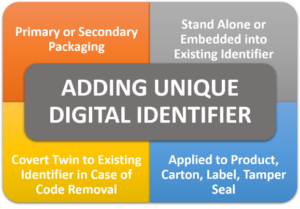
Products become digital touchpoints by adding unique, item level digital identifiers to the product or its packaging. This could include applications of a digital identifier to primary or secondary packaging; the capability to attribute or optically fingerprint an existing digital code or added as a covert digital identifier or “twin” to an existing printed code that prevents removal or copying of the code. These encrypted or covert digital identifiers can be added directly to the product carton, an adhesive multi-featured label, or a specialized tamper seal or other bottle or carton closure.

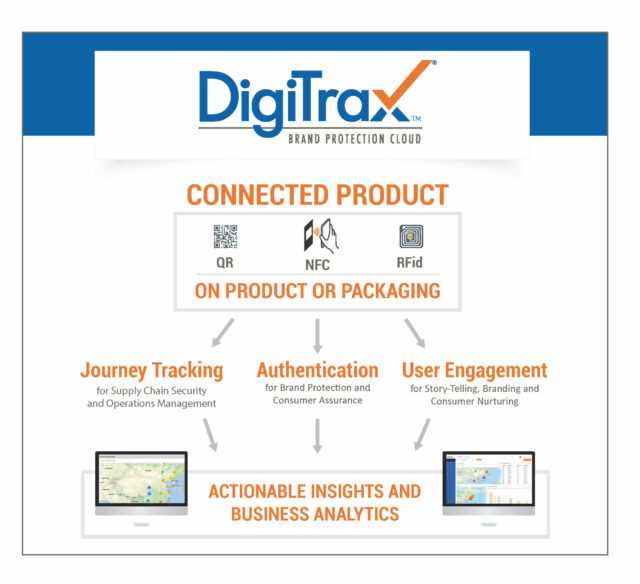
Unique identifiers can be delivered in multiple formats allowing for less complicated implementation, lower incremental costs, and increased levels of security. These may include overt or covert data matrix and QR codes, human readable alphanumeric codes, or embedded NFC chips, all of which can extend the visibility of the product’s journey from the manufacturer all the way to the retail consumer utilizing native smartphone capabilities.

Who can interact with connected products and how does it happen?

Multiple personnel can engage with a product and generate a recorded event or transaction as it moves through the supply chain to the final point of sale.  These transactions, evidencing a product’s journey, may occur in different ways and for different purposes. If we split these users into three groups, these could be classified as:

  • Group 1: Brand owners, vendors, employees, agents, or 3PL providers
    • This group tends to use industrial scanners to engage with or interact with the codes for inbound and outbound shipments through standard supply channels
  • Group 2: Contracted or agent inspector teams, law offices, law enforcement, or customs agents
    • These users can validate the authenticity of a product via a smartphone, with or without an app. The addition of an app allows inspectors to impart more detailed information, such as product pedigree and interactive incident reporting and management back to the brand owner
  • Group 3: End Users / Consumers
    • Consumers are growing more averse to downloading proprietary mobile apps to engage with a brand and have shown a preference for QR codes and NFC tags, both functions enabled natively in most smartphones today. Therefore, the ability to simply scan the secure and proprietary code to obtain more information about the product or its authenticity is essential for a greater level of consumer participation in this process. A digital track and trace solution such as Authentix’s DigiTrax™ also supports a unique ability to tailor the consumer web experiences to company brands by enabling interactive engagement post product scan. Integrated with a single scan event, the consumer can, for instance, receive brand storytelling, digital promotions, manage loyalty programs and connect to social media channels.

Using the DigiTrax solution as an example, the digital authentication process occurs as follows:

  • The user scans or taps a code on a product using a smartphone.
  • The data is submitted to a secure platform which determines the authenticity of that product and the result (yes/no) is sent back to the user in real time.
  • If the code is marked in the system as invalid, the user is notified, and an incident is recorded in DigiTrax.
  • The user is exposed to the delivery of branded content after authentication.
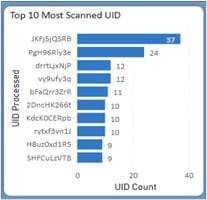
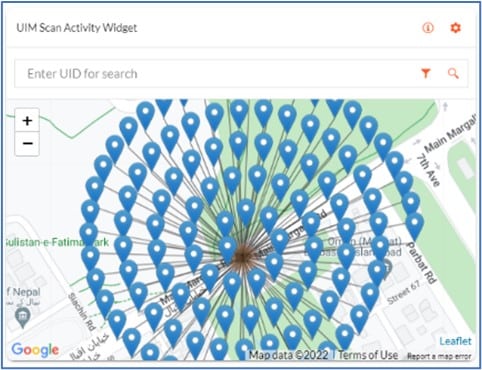
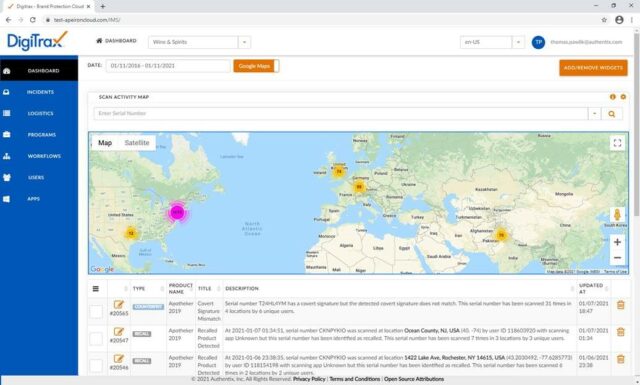
  • The brand owner accesses real-time scan data on a dashboard, which provides strategic insights and analytics that are helpful to multiple functional areas within the company.
How are connected products used?

Connected products are extremely powerful when used for the following objectives:

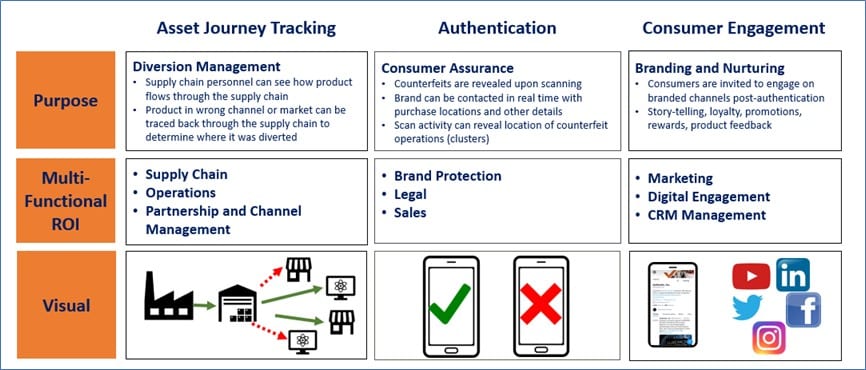
  • Journey Tracking for supply chain security and operations management. This is generally used for diversion management so that supply chain personnel can see how product flows through the supply chain and if the product is in the right place at the right time. If the product is in the wrong channel or market it can then be traced back through the supply chain to determine where the diversion occurred.
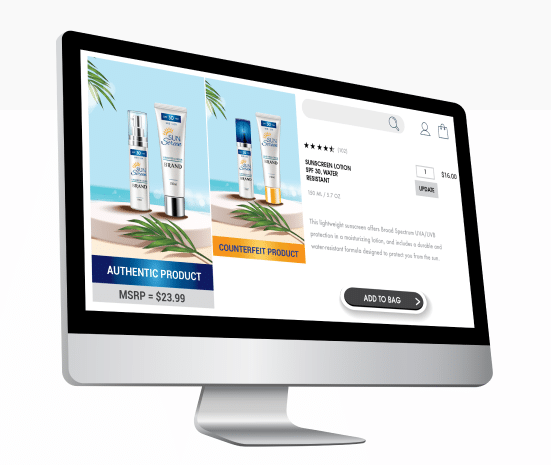
  • Authentication for brand protection and consumer assurance. Consumers and other users scan the product with their smart phone camera and learn whether the product is genuine or suspect. Counterfeits are revealed, and brand owners are alerted in real time with purchase locations and other critical details.
  • Consumer Engagement for storytelling, branding and consumer nurturing. After authentication, consumers are invited to engage with the brand for marketing purposes. This could include receiving brand storytelling, digital promotions, loyalty and reward information, and links to social media and other brand channels.

The key to a successful brand protection program is the recognition that ROI can be achieved across multiple functions in the company and leveraging the data gleaned during the process for actionable insights and business analytics.  Functions that benefit from scan data include legal, brand protection, supply chain, operations, channel management, marketing and digital engagement.

What types of data can be delivered to the brand?

An enormous amount of meaningful data can be delivered to brand owners in digital brand protection programs including information about a product’s provenance, its journey through the supply chain, the location/date/time of associated transactions including consumer scan events, validation of authentication or suspected illicit activity, and direct consumer marketing and engagement.

In summary, digital authentication and connected products are a critical component in rapid detection of product compromise and can be harnessed to deliver much more, too. Connected products are powerful inspection, reporting and communication tools that continue to deliver data to the brand and information to the consumer long after their point of sale.

To learn more about Authentix digital brand protection solutions, click here. 

Using Data Collected in Brand Protection Programs

     |     

Protecting consumers and safeguarding your company’s brand identity and reputation is becoming increasingly challenging in today’s environment with the continued growth of counterfeit and diverted products entering the market. At the same time, consumers are taking a more proactive role in choosing to buy brands they know and trust, while expecting increased transparency in brand promise.

Leveraging Digital Systems for Supply Chain Transparency

As supply chains become increasingly complex, brand owners are facing intense pressure to respond to traceability and transparency challenges by utilizing digital systems for collecting valuable data and analyzing and acting upon the visible trends to help consumers authenticate products at points of sale, or alternatively connect and engage with the brand owner directly via the web or app. A digital solution helps with monitoring product movement in the supply chain, as well as direct consumer feedback, to confirm legitimate or potential suspect product in the marketplace.

67% of consumers say brand trust has a great deal of influence over their buying decisions.

In todays connected marketplace, most companies already collect and use various forms of data analytics to drive ongoing business decisions and strategic initiatives. In fact, business action and decision making has become reliant on the use of data analytics to manage many day-to-day operations. Despite this growing reliance on data, most organizations have yet to apply the practice successfully when it comes to brand security. This can partly be attributed to the lack of reliable data available since the early adoption of digital track and trace capabilities for risk-based products is only beginning. The key to effectively using data in brand protection programs is to understand what data is available now, what data is needed that is not available, how to efficiently collect and analyze the data and lastly, what action can be taken based on this analysis to effectively reduce counterfeiting and diversion while simultaneously engaging directly with the consumer.

Data Identification

An enormous amount of meaningful data can be gleaned in digital tracking for brand protection programs including information about a product’s provenance, its journey through the supply chain, the location/date/time of associated transactions including consumer scan events, validation of authentication or suspected illicit activity, and even direct consumer marketing and engagement.

However, how to apply the data once collected can be different for each company. At Authentix, we collect supply chain and consumer interaction data from multiple sources and aggregate it into our secure cloud-based platform on behalf of our brand owner clients. From there we are able to configure rules and analyze data trends to provide our clients with complete visibility into the suspect events or grouped metadata revealing weak links or threats in supply chain operations that often point to product compromise.

Data Collection

The following are key areas for collecting data using digital track and trace technology.

  • Data Carrier Technology – includes multiple formats of barcodes, NFC and RFID technologies for supply chain tracking, purchase and post purchase consumer engagement, inventory movement, and theft prevention. These technologies vary greatly in terms of volume capacity, costs, application requirements and security levels, so it is important to evaluate the best types of code formats and integration to existing manufacturing and packaging processes that best meet the minimum needs that would produce a valuable return.
  • Track & Trace – can be accomplished during sourcing, manufacturing, distribution, and pre- and post-sale stages. During the printing, manufacturing or packaging process for example, the scope of implementation choices widen and we can provide multiple routes to enable tracking of product origin information, manufacturing location(s), production lines designation and more. Additionally, as the product nears closer to the point of sale, we’ll begin seeing authentication activity and the collection of meaningful data such as distributor and consumer interaction and engagement, and sustainability and circularity.
  • Authentication – in most digital track and trace systems, analysis of authenticity is often achieved via a smartphone. This can be by company inspectors using a proprietary mobile application all the way to the consumer who can interact with the product without having to download a mobile app. Using the Authentix DigiTrax™ track and trace solution as an example of direct consumer engagement, the smartphone user simply scans a proprietary and encrypted QR code which directs them to a custom URL experience that can include, among other things, the unique information associated with the individual product scanned. These consumer product scan events including geo location, date, time, product and product provenance information are submitted to the secure cloud-based DigiTrax platform where the information can be used to understand purchasing trends, market directly to the user, or allow the user to authenticate the product using proprietary codes or PINs. If designed for the purpose, the results of the authentication can be sent back to the user in real time. This technology also enables inspectors in the field and other key stakeholders to identify the authenticity of a product instantly using a more sophisticated mobile application. In addition, consumers may also use the DigiTrax platform to verify authenticity of other products or for the purpose of continuing engagement with brand owner purely for marketing purposes.
  • Online Surveillance and Enforcement – are methods, systems, and services used to identify, investigate and takedown unauthorized e-commerce websites that deal in illicit trade of counterfeit, diverted, or stolen products. This is accomplished through automated online tools and services such as marketplace monitoring, WeChat micro tasking, and machine learning which can identify risk levels, hot zones and image matching to police and eliminate unauthorized sales of product and illegal use of trademarks on the internet.

Putting Data to Use

Reliable and timely data feedback enables brand owners to quickly answer complex supply chain events, pinpoint trouble spots, and take corrective and even preventative action to reduce the instances and threats of unauthorized product entering the marketplace. Data can be used to assess multiple business-centric operations to increase sales and market share, acquire and build trust with new customers, and reinforce brand assurance, to name a few. In addition, as consumers become more reliant on smartphones for collecting and communicating information, brand owners can capture consumer data to tailor experiences and increase engagement and loyalty.

Using Data to Drive Success

Authentix customers are using valuable brand protection data and analytics in multiple ways with great success. In one customer success story, an international wine exporter faced counterfeiting and diversion issues in China, resulting in loss of consumer trust and risk to its strong market share and long term brand loyalty it had spent years building. Authentix helped the client implement a multi-layered digital authentication solution with covert and overt on-product features that flags, collects and analyzes all inspector and consumer scanning activity including the capability of retail product authentication by the consumer. The result? Over 150 counterfeit retail locations were identified and remediated. Also, through direct consumer engagement, loyal brand purchasers became more confident in product authenticity and the client was able to maintain premium pricing for their superior and quality products.

In another example, an international brand customer incurred online marketplace counterfeiting in Asia, putting consumer health, safety and loyalty at risk as well as decreasing revenues. Authentix helped the client implement a multi-phased online brand protection monitoring solution and services to identify and investigate the online sale of spurious product and locate complicit bottling and closure manufacturers involved in the illicit trading. Website takedowns were initiated, resulting a 90% reduction in fake products in Indonesia, 1,500 online listing takedowns in Malaysia, and 13 raids and enforcement actions conducted in China.

Start Big or Small. Just Start.

It’s important to point out that you do not have to implement a full scale approach to digital authentication initially and it’s easy to begin collecting and leveraging data – even if it’s just one product or product line for a particular geography. Alternatively, digital automation for brand protection programs can be implemented in a sweeping fashion as an end-to-end solution from the start with a full technology suite. Most clients choose to implement in logical steps based on risk assessment, ease of implementation, and to the most critical geographic areas. The key is to get a secure digital mark on your product and start the data collection process. Ultimately, it is how much data, the association of the data elements for analysis, and the conclusions and action you take that determines how much your brand protection program can be enhanced by bringing in digital track and trace automation. The key is to start, analyze, adjust, expand and continue until the data flow and insights provided are resulting in the development and refinement of actions and policies to take command of the risks faced each day.

Learn more about Authentix brand protection solutions, HERE.

Authentix Expands into Online Brand Protection Services

     |     

From Identification, Surveillance, Investigations, and Website Takedowns: Authentix now Provides Full Service Online Brand Surveillance and Enforcement

To expand its capabilities in digital brand protection for brand owners, Authentix has recently acquired Strategic IP Information Pte Ltd (SIPI), a leading online brand and content rights protection service.

For over ten years, SIPI has offered state-of-the-art services for brands to track unauthorized channels for counterfeit products through its proprietary online tools and array of customized services including physical enforcement, investigations, sample purchases, and taking down pirated listings. Using a team of dedicated analysts and sophisticated platform technology, we can promptly detect infringement and counterfeiting activity for rapid action and consolidated, insightful reporting for the 200 brand customers now serviced.

In the last two decades, counterfeiting has quickly grown from city sidewalks to the internet marketplaces. While e-commerce has opened new doors for traditional and start-up brands, it has also provided illicit traders lucrative access to a global customer base.  Online counterfeit goods now total an estimated $590 billion globally and according to a recent study by the European Union Intellectual Property Office, 1 in 10 online buyers has been deceived into buying a counterfeit product.

Tokyo Olympics – Example of Recent Target

As online marketplaces continue to be exploited by illicit traders there is a growing amount of peddling with convincing bootleg and falsified versions of branded products. This illegal activity increases during major global events such as the recent Summer Olympics in Tokyo for example. While there was ample licensed merchandise sold through the official online store of the Olympics, there was also falsified and unlicensed merchandise selling through illegitimate, third-party websites.

As Authentix/SIPI closely followed the action in the Olympic games, they also investigated licensed branded merchandise sold online, where it was discovered that marketplaces, social media and multiple 3rd party websites were offering unlicensed and infringing products. Using t-shirt sales as an example, the product offered on certain websites we investigated all displayed the Olympic branding TOKYO 2021. However, despite being held belatedly this year because of the COVID pandemic, the Tokyo Olympics retained TOKYO 2020, precisely because merchandise with the 2020 branding had been manufactured prior to the delay. Therefore, any merchandise bearing 2021 in the labels was quickly identified through automated means and was presumed to be suspect. To date merchandise bearing Tokyo 2021 is readily available on major marketplaces such as Aliexpress, Wish, Dhgate, ebay and Amazon. Discrepancies in branding and use of marks such as the TOKYO 2020 logo were also found to be compromised during our investigation.

There are many technological advancements such as product clustering, geo location mapping and machine learning based algorithms that can be used to find products compromised in the various marketplaces, discover major networks of illicit traders, and find many other forms of IP infringement. Once infringements such as the examples used above for the Tokyo Olympics are identified, viable and rapid action including shutdowns can be taken against the perpetrators, holding them accountable for their actions and helping to further prevent unauthorized products from being placed on the market.

To learn how Authentix Online Brand Protection Services can quickly work for your company’s on-line monitoring and enforcement needs, visit our website.

Meeting The Biofuel Compliance Challenge

     |     

By: Jeff Conroy, Chief Technology Officer, Authentix

Authentix is pleased to be included in the June/July edition of Tank Storage Magazine, a leading industry publication delivering the latest news and developments to the bulk liquid storage and terminal sector.

In our feature article, Jeff Conroy, PhD, Chief Technology Officer for Authentix, discusses the challenges and possible solutions for the quality assurance and source integrity of renewable biofuels which are increasingly relied upon to meet mandates greenhouse gas (GHG) reductions.

However, the production of biofuels from non-sustainable sources or energy intensive processes can lead to reduced environmental benefits or even an overall increase in emissions, so the pedigree of otherwise chemically identical biofuels becomes very important.

READ THE FULL ARTICLE HERE

Implementing an Effective Brand Protection Program

     |     

From Risk Identification to Full Implementation

Part 4 of The ABC’s of Brand Protection series by Authentix focusing on the global scope of the counterfeiting epidemic and how to act against it to protect your brand, your customers and your revenue.

In articles 1, 2 and 3 of this series, we’ve discussed the vast scope of the global counterfeiting problem, the tactics used by counterfeiters, and security features used on many products today to detect and mitigate these compromises. You are aware that this is a massive problem but how do you determine if your products are at risk? Understanding and assessing these risks is the first vital step to start mapping out your company’s action plan, resulting in an effective brand protection program.

Five Steps to Determine if Your Products are at Risk

  1. Identify the risk areas

First, develop a risk inventory for your product line. The level of risk might differ depending upon supply chain complexity, geography, price point, margins, and anticipated demand. Consider these questions to identify vulnerabilities:

  • Is my product line high volume with a low variable cost to produce?
  • Are these products sold at higher price points and gross margins?
  • Does my product line have an existing or potentially large market share?
  • Does my product line and/or packaging currently have covert or overt security features that are economic deterrents to prevent counterfeiting?
  • Do we sell through a complex supply chain and lose visibility to the point of sale?
  • Are any of these products sold online or manufactured in countries without stringent counterfeit enforcement laws?
  1. Assess risk

Determine the likelihood, impact, and overall threat of each risk factor. How susceptible is each product in your portfolio for attempted compromise? Use this information to create a portfolio of the higher risk products which includes:

  • Aggregated risks – score each product with weighted indicators to prioritize by risk potential
  • Map of the supply chain environment – what are the highest points of exposure and where do we have access?
  • Potential short- and long-term damage – Consider:
    • How could adverse events of illicit supply affect consumer trust in your brand?
    • What about liability from health issues caused by compromised product?
    • How much market share and revenue dilution could be happening?
  1. Develop a risk management strategy

Examine the results of your risk assessment to create an integrated strategy for each high-risk product that includes potential solutions to address all the foreseen threats:

  • Adopt a defined set of policies and procedures where your stakeholders are aligned
  • Look at available solutions to address specific product risks by threat area; for example – consumer safety vs. losses from diversion activity
  • Address what actionable steps can be taken at the physical points in the supply chain where threats are the greatest
  • Play out each risk scenario and escalation possibilities for contingent action upon the event including communication strategies
  • Prepare a budget to implement solutions based on your assessment
  1. Create an action plan

Responses to the most pressing threats can now be put into action by organizing management, information, and technology solution partner(s). Your action plan should include the following three categories:

  • Detection and Deterrence – solutions that provide detection of a non-authorized product in the supply chain, proactive awareness campaigns, investigatory procedures upon detection, vendor agreements that include security policies for handling or manufacturing higher risk products, and unannounced audits of downstream distribution partners.
  • Enforcement – the pre-determined action you plan to take upon the detection of an adverse event. This might depend on the event’s geography, supply chain level, and the resources you have allocated for enforcement.
  • Prosecution – plan the specific steps that will be taken to support investigative and forensic efforts upon the discovery and confirmation of responsible parties. In some countries, enforcing your supply agreements against offending distribution partners might be a better course of action than criminal prosecution.
  1. Monitor risk and continually re-evaluate your strategy

The last step in your strategy is a closed loop. Constant review of your data analytics offers an opportunity to better understand changing risks, increased or decreased vulnerabilities, and allows you to refine your actionable policy proactively. Today, data visualization coupled with a strong physical security element is even more critical in the fight against illicit product placement activity.  Analyze and act on these insights revealed in the reporting information– from new counterfeit hot spots to changing risk as time evolves.

The fact is no one solution or security measure will be the panacea to address all instances of product compromise across the global marketplace. However, as a brand owner you can assess these risks and select the right security solution partner(s) to help minimize the damage and keep you in charge rather than being in a reactionary stance. Also, it is important to select solution partners with lengthy experience in multiple industries who can offer a full suite of technology and service solutions that can both be rapidly implemented and scale to your business needs.

For more brand protection basics – why it is necessary, how it works, who is vulnerable, how to implement an effective program, what to look for in a technology partner, and which emerging technologies will make a difference in the future – download the eBook, The ABC’s of Brand Protection.

Download the eBook

READ PART 1     |      READ PART 2    |    READ PART 3

Stealthy Security: Anti-Counterfeiting Tactics

     |     

Part 3 of the ABC’s of Brand Protection series by Authentix focusing on the global scope of the counterfeiting epidemic and how to take action against it to protect your brand, your customers and your revenue.

We must face the facts. Counterfeiters make it their mission to knock off high-value products and they can be very good at it. With the right tools and illegal intent, a counterfeiter can create a product and packaging close enough to the original to easily fool consumers. And as technology becomes more accessible, it only gets easier for them to duplicate the basic one-dimensional protection measures a brand might implement. To fight back, you’ll need an arsenal of security features that can be woven seamlessly into the product and packaging design making it far less vulnerable to bad actors.

Each security feature serves a unique purpose. Overt or visible features allow the end consumer to verify authenticity of their purchased product. There are also covert or invisible markings enable trained inspectors to quickly authenticate genuine products in the supply chain, identify the source of diversion or determine other illicit activities.  When combined with careful design and production quality controls, these features raise the bar of complexity for counterfeiters and make the product a less attractive target.

Categories

Let’s break down six basic categories of anti-counterfeiting features. You might have implemented one as a security tactic, but still battling diversion in the marketplace. Rather than one and done, think of these tactics as a multidimensional security wall that helps identify authentic products from fakes.

  • Overt Security FeaturesThese visible features can easily be detected and are often beautifully incorporated into the design of the product or packaging.
  • Covert or Semi-Covert Security Features – Covert and semi-covert features are invisible to the naked eye or disguised but can be found and measured with specialized handheld devices using proprietary optics and detection algorithms for rapid, secure field authentication.
  • Forensic Security Features – Forensic analysis involves laboratory testing of products via an embedded (non-native) component or molecule added to a substrate or solution to determine authenticity.
  • Serialization or Track and Trace Features – The application of individual unique codes at the point of manufacture (giving each product an identifiable attribute) and defined scanning locations where retrieval and association of the unit can be linked to the scanning transaction.
  • Digital solutions – The application of a unique code, number or symbol that results in a digital ID recorded in a database. Product attributes such as manufacturing date and time, expiration dates, lot numbers, pictures, and a host of other origin information can be added to the database record and associated with the product.
  • RFID – Radio Frequency Identification (RFID) is a small antenna and receiver system where a unique product-level ID is hidden or embedded in a small chip or printed label. The ability of these “electronic labels” to communicate with a centralized database system performs like other track and trace systems.

One Tactic Is Not Enough

An effective multilayered approach using overt, covert, and forensic security features is the most effective long-term solution to detect and deter counterfeiting. When incorporated into labels, closure seals, storage cartons, and packaging, each type of feature serves a unique purpose — from color-shifting ink that allow end-users to quickly identify a branded product as genuine to covert markings that enable an inspector to identify many factors involved with the source of authenticity.

For a deeper dive into the details of each type of security feature and other brand protection basics – why it is necessary, how it works, who is vulnerable, how to implement an effective program, what to look for in a technology partner, and which emerging technologies will make a difference in the future – download the eBook, The ABC’s of Brand Protection.

Download the eBook

READ PART 1     |      READ PART 2

The Case for Implementing National Fuel Integrity Programs

     |     

Reducing Illicit Fuel Fraud and Recovering Revenue for National Governments around the World

By Andrée Bourgeois, Senior Marketing Manager, Authentix

The impact on national governments from adulterated, diluted, and illegally trafficked fuel within a country’s borders results in lost tax revenue, poor quality product, environmental issues, and ultimately reduced community services and benefits for citizens. After 25 years of working with dozens of government ministries and leaders to implement fuel integrity programs across the globe, Authentix has helped many countries expand revenue collections by reducing or eliminating the proliferation of tax avoidance and illegal profiting through illicit fuel sales. Many countries that implement an Authentix fuel integrity program quickly see reductions of this illegal activity by more than 30 percent annually with corresponding increases in taxation revenue.

Our experience and years of data has proven that implementing fuel integrity programs has substantial benefits to many national governments and its citizens alike, providing very high returns on investments made. Many governments have published data showing the positive impact of securing and monitoring their fuel supply including Ghana, Serbia, Zambia, South Africa, and most recently, Kenya published an article further confirming the effectiveness of its fuel integrity program. As stated in the publication businessdailyafrica.com, Kenya’s Energy and Petroleum Regulatory Authority (EPRA), which is mandated under Section 92 of the 2019 Petroleum Act, is charged with monitoring petroleum products offered for sale in the local market and has continued to enhance its fuel integrity program with tremendous outcomes. As a result, Kenya continues to reduce fuel adulteration and is well on the way to achieving near 100 percent reduction of fuel fraud.

READ THE FULL ARTICLE HERE.

To mitigate adulteration challenges, many governments such as Kenya have taken action to implement national fuel integrity programs curbing fuel fraud, recovering missing tax collections, and restoring confidence in the national fuel supply. These programs are continuing to grow in number and scope as technology advancements result in more sophisticated enforcement techniques as well as building a history of data retention, correlation, and actionable insights over time. As programs remain implemented, product and supply chain data are collected over multiple points in the supply chain — providing organizations complete visibility of trends, reconciliation issues, and machine learning capabilities to help prevent, correct, enforce, and ensure ultimate compliance.

Most fuel integrity programs in place today involve chemically marking fuel at refineries and/or terminal distribution points to ensure that all fuel in the downstream supply chain can be authenticated all the way to retail points of sale. The fuel is typically marked by dosing with an inert, organic chemical marker at levels so low (parts per billion), the presence of the marker cannot be detected without proprietary and highly sophisticated devices. As fuel is sampled and tested in supply vehicles, retail stations, and even consumer vehicles, it is possible to determine if the fuel has been diluted with substandard or non-taxed products such as waste oil, off-road tax-free fuel, or via other illicit means. The detection technique enables accurate quantification using portable analyzers in the field or more enhanced, forensically defendable methods in a laboratory.

Authentix is the market leader throughout the world delivering these solutions and has become a trusted and effective partner for national governments to validate fuel quality and supply authenticity, and provide the tools to enforce and prosecute those whom are trafficking illicit fuel products. Authentix continues to build its large library of unique covert markers, resulting in the highest level of authentication security and effectiveness available today. Authentix has spent decades building its suite of custom markers which take many different forms and vary in application and use based upon the country’s unique set of requirements.

The return on investment of successfully deployed fuel integrity programs by Authentix is substantial, helping governments recover millions in lost tax revenue each year, while positively impacting the society through expanded services and infrastructure and resulting in a cleaner environment for all.

Learn more about Authentix National Fuel Integrity Programs.

Andrée Bourgeois is Senior Marketing Manager for Authentix. As the authority in authentication solutions, Authentix thrives in supply chain complexity. We provide advanced authentication solutions for governments, central banks and commercial companies, ensuring local economies grow, banknote security remains intact, and commercial products have robust market opportunities. Our partnership approach and proven sector expertise inspires proactive innovation, helping customers mitigate risks to promote revenue growth and gain competitive advantage.

The Dark Arts of Counterfeiting

     |     

Part 2 of the ABC’s of Brand Protection series by Authentix focusing on the global scope of the counterfeiting epidemic and how to take action against it to protect your brand, your customers and your revenue.

By the Authentix Brand Protection Team

Brands are working harder than ever to provide transparency into their business practices. The customer trust and loyalty that this creates is invaluable and the holy grail of marketing departments. A sure-fire way to destroy that trust is to be subjected to counterfeit controversy – product falsification, consumer harm, or news of legal action against a brand can prove toxic to any popular brand.

Tactics

Organized criminal enterprises have developed sophisticated networks of willing players throughout the global supply chain in practically every industry to cause such destruction. Some of their tactics include:

  • Counterfeiting
  • Diversion
  • Tampering/Reuse
  • Adulteration

Today, companies expand their operating and delivery efficiencies at lower costs with high-quality manufacturing available around the world. However, that innovation comes at a cost by enabling undetectable counterfeit goods to make their way into the supply chain. Buzzworthy brands with growing demand, celebrity clout and premium price points are most-targeted. The resulting inferior quality and/or faulty parts lead to consumer dissatisfaction, recalls, and major safety concerns.

It’s not just back alley transactions and big city flea markets that you need to worry about anymore. The rise of digital marketplaces such as Amazon, eBay, and Etsy (plus countless others that emerge each year) enable and accelerate sales of knockoff goods not only to willing buyers, but unsuspecting ones as well. In fact, according to a 2018 study by the U.S. Government Accountability Office, about 40 percent of a sample of goods bought on popular eCommerce websites were fake. Data collected by the U.S. Customs and Border Patrol between 2000 and 2018 shows that seizures of counterfeit and pirated goods at U.S. borders, much of destined for e-commerce channels, has increased ten-fold.

It is forecast that by 2022, the negative impact of counterfeiting and piracy will drain US $4.2 trillion from the global economy and put 5.4 million legitimate jobs at risk. This impact cuts a wide swath across many industries and businesses including:

  • Pharmaceuticals and OTC Medicines:

    At least one million people die each year after consuming counterfeit medicines.


  • Tobacco:

    If the global illicit trade in tobacco was eliminated, governments would gain at least US $31 billion in additional taxation revenue. Curbing this illicit trade could save over 160,000 lives annually by 2030 and beyond.


  • Spirits and Premium Drinks:

    Counterfeit or illegal alcohol, recognized as “unrecorded” alcohol, is not monitored for quality or taxation. The WHO estimates that 25 percent of the alcohol consumed worldwide is unrecorded.


  • AgroChem:

    The WHO estimated that counterfeit and adulterated pesticides poison over three million people7 annually and result in over 200,000 deaths mainly in developing countries due to unregulated trade enforcement.

  • Health & Beauty:

    According to the FBI, counterfeit cosmetics have contained adulterants such as paint thinner, which irritates the eyes, nose, and throat in addition to being flammable and poisonous.


In this climate, many companies are thinking more broadly about how to implement coordinated anti-counterfeiting and anti-diversion strategies across their brands and throughout different regions of the world. Just as tamper-evident seals on bottles of pills and liquid formulations became more common after a tampering scare in the 1980s, attitudes toward anti-counterfeiting technologies are beginning to evolve.

For more brand protection basics – why it is necessary, how it works, who is vulnerable, how to implement an effective program, what to look for in a technology partner, and which emerging technologies will help protect your brands in the future – read the The ABC’s of Brand Protection.

Download the eBook

The ABCs of a Successful Brand Protection Program

     |     

Part 1 of the ABC’s of Brand Protection series by Authentix focusing on the global scope of the counterfeiting epidemic and how to take action against it to protect your brand, your customers and your revenue.

Successful Online Brand Protection Solutions by Authentix

By the Authentix Brand Protection Team

The Global Impact of Counterfeiting

The negative impact of counterfeiting and piracy is projected to drain U.S. $4.2 trillion from the global economy and put 5.4 million legitimate jobs at risk by 2022.1 Are your products protected? They need to be.

If anyone of us were to think about the purchases we made over the years, we’ve probably purchased a counterfeit good.

Supply Chain Complexity

It’s estimated that more than 80 percent2  of all global consumers have unwittingly purchased falsified products. This concept is proliferated by the ever-growing global supply chain and all its complexities that foster an environment lacking required ingredients, quality control, or government oversight. To get ahead of the counterfeiters, brand owners need a brand protection program to shield what matters most to your business – customers, brand, and revenue.

Counterfeiting During Crisis

The gaps in the system are magnified even more during a pandemic. In the same week COVID-19 was declared a pandemic, a fake and dangerous rendition of a popular potential therapeutic drug with a street value of more than $14 million was seized by Interpol4 . It’s time to sound the alarm. No one industry is immune to such calculated nefarious acts. Brand owners from health and beauty, food and beverage, pharmaceutical, to apparel experience financial losses and more importantly, added risks to consumer health and safety.

Benefits of a Strong Brand Protection Program

The good news is that today’s anti-counterfeiting solutions to detect and deter fraud are growing more sophisticated, affordable, and accessible. The benefits of a strong brand protection program are three-fold:

  1. Protection of the brand owner’s livelihood – namely its reputation and investments into market-leading proprietary products.
  2. Consumer protection – no brand owner wants their name associated with health hazards or calamities resulting from brand compromise.
  3. Corporate citizenship – proactive companies that deploy product protection programs and are serious about a no-compromise climate are more responsible corporate citizens. This leadership and transparency can contribute exponentially to customer loyalty as it humanizes the brand.

Taking Action Against Counterfeiting

CONSIDER THIS: The global economic value of counterfeiting and piracy could reach U.S. $2.3 trillion by 2022.3

Do you have a strategy in place, with policies and dedicated infrastructure to combat product fraud? Maybe you partner with a trusted third-party technology and solution provider. Maybe you don’t yet have a brand protection program in place. No matter your approach to the counterfeiting issues, knowledge is power.

Counterfeiting is real and impacts everyone in the supply chain. This article addresses a single layer of the importance of brand protection programs. We have more facts, figures and trends in our latest eBook, The ABC’s of Brand Protection. This eBook offers a crash course in how brand protection works, who is vulnerable, how to implement an effective program, what to look for in a technology partner, and which emerging technologies will make a difference.

Sources
1. https://iccwbo.org/media-wall/news-speeches/global-impacts-counterfeiting-piracy-reach-us4-2-trillion-2022/
2. https://www.dhs.gov/sites/default/files/publications/20_0124_plcy_counterfeit-pirated-goods-report_01.pdf
3. https://iccwbo.org/media-wall/news-speeches/global-impacts-counterfeiting-piracy-reach-us4-2-trillion-2022/
4. https://www.bbc.com/news/health-52201077

Back To Top